
1. Ynlieding
This instruction manual provides essential information for the safe operation, maintenance, and troubleshooting of your Craftsman Model 113.24350 12-inch Band Saw/Sander. Please read this manual thoroughly before operating the machine to ensure proper use and to prevent personal injury or damage to the tool. Keep this manual in a safe place for future reference.
The Craftsman 113.24350 is a versatile woodworking machine designed for both cutting and sanding operations. Its band saw function allows for intricate cuts in various materials, while the sanding feature provides a smooth finish. Understanding the components and their functions is crucial for effective and safe use.
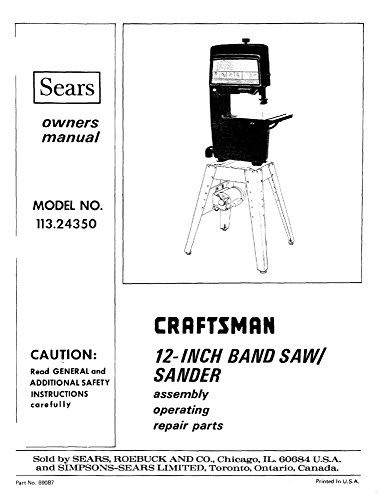
Figure 1: Cover of the Craftsman 113.24350 12-inch Band Saw/Sander Instruction Manual. This image displays the front cover of the manual, indicating the model number and tool type.
2. Algemiene Safety Ynstruksjes
Always follow basic safety precautions to reduce the risk of fire, electric shock, and personal injury. This section outlines general safety guidelines applicable to all power tools.
2.1. Wurkgebiet Safety
- Hâld it wurkgebiet skjin en goed ferljochte. Romme of tsjustere gebieten noegje ûngemakken út.
- Betsjinje gjin elektryske ark yn eksplosive atmosfearen, lykas yn 'e oanwêzigens fan brânbere floeistoffen, gassen of stof. Elektryske ark meitsje vonken dy't it stof of dampen oanstekke kinne.
- Hâld bern en omstanners fuort by it betsjinjen fan in elektryske ark. Ofliedingen kinne feroarsaakje dat jo kontrôle ferlieze.
2.2. Elektryske feiligens
- Power tool plugs moatte oerienkomme mei de outlet. Feroarje de plug nea op ien of oare manier.
- Foarkom lichemskontakt mei grûn oerflakken lykas buizen, radiatoren, berik, en kuolkasten. D'r is in ferhege risiko fan elektryske skok as jo lichem op grûn is.
- Net bleatstelle macht ark oan rein of wiete omstannichheden. Wetter yn in elektryske ark sil it risiko op elektryske skok ferheegje.
2.3. Persoanlike feiligens
- Always wear eye protection. Use a face mask if sanding operations create significant dust.
- Wear appropriate clothing. Do not wear loose clothing, neckties, or jewelry that can get caught in moving parts.
- Use hearing protection when operating noisy machinery.
- Bliuw alert, sjoch wat jo dogge, en brûk sûn ferstân by it betsjinjen fan in elektryske ark.
3. Opset en gearkomste
Proper setup is crucial for the safe and efficient operation of your band saw/sander. Follow these steps carefully.
3.1. Unpacking en ynspeksje
- Ferwiderje alle komponinten foarsichtich út 'e ferpakking.
- Inspect all parts for damage during shipping. If any damage is found, do not assemble or operate the machine. Contact customer service.
- Verify that all listed components are present according to the packing list.
3.2. Mounting the Machine
The band saw/sander should be securely mounted to a sturdy workbench or stand to prevent movement during operation.
- Position the machine on a flat, stable surface.
- Use appropriate bolts and washers to fasten the machine through the mounting holes in its base to the workbench. Ensure all fasteners are tightened securely.
3.3. Blade Installation (Band Saw)
- Koppelje de macht los before installing or changing blades.
- Open the blade guard and access doors.
- Loosen the blade tension knob to relieve tension.
- Carefully position the new blade around the upper and lower wheels, ensuring the teeth point downwards towards the table.
- Pas de blêdgidsen en druklagers oan, sadat se ticht by it blêd binne, mar it net oanreitsje.
- Apply appropriate blade tension. Refer to the tension guide on the machine or in this manual.
- Close all guards and doors.
3.4. Sanding Belt Installation (Sander)
- Koppelje de macht los before installing or changing sanding belts.
- Locate the belt tension lever and release the tension.
- Remove the old sanding belt, if present.
- Slide the new sanding belt onto the drive and idler rollers, ensuring the directional arrow on the belt matches the rotation direction of the machine.
- Draai de riemspanningshendel wer oan.
- Adjust the belt tracking knob until the belt runs centrally on the rollers without rubbing against the machine frame.
4. Bedriuwsinstruksjes
This section covers the basic operation procedures for both the band saw and sander functions.
4.1. Band Saw Operation
- Pre-operaasje kontrôle: Ensure the blade is correctly installed, tensioned, and the guides are properly adjusted. Verify all guards are in place.
- Materiaal tarieding: Feilich clamp or hold the workpiece. Ensure there are no nails, screws, or foreign objects in the cutting path.
- Adjusting Blade Guide: Lower the upper blade guide assembly so it is approximately 1/8 inch above the workpiece.
- De masine begjinne: Turn on the power switch. Allow the blade to reach full speed before beginning the cut.
- De besuniging meitsje: Feed the workpiece slowly and steadily into the blade. Do not force the material. Use a push stick for small pieces.
- De masine stopje: Turn off the power switch and wait for the blade to come to a complete stop before leaving the machine or removing cut material.
4.2. Sander Operation
- Pre-operaasje kontrôle: Ensure the sanding belt is correctly installed and tracked. Verify the work table is clean.
- Materiaal tarieding: Hold the workpiece firmly against the sanding belt or disc.
- De masine begjinne: Turn on the power switch. Allow the belt to reach full speed.
- Slypjen: Apply light, even pressure to the workpiece against the moving belt. Move the workpiece continuously to avoid creating grooves or burning the material.
- De masine stopje: Turn off the power switch and wait for the belt to come to a complete stop.
5. Underhâld
Regular maintenance ensures the longevity and safe operation of your Craftsman band saw/sander. Always disconnect the machine from the power source before performing any maintenance.
5.1. Cleaning
- After each use, clean sawdust and debris from the machine using a brush or vacuum cleaner.
- Pay special attention to the blade guides, wheels, and sanding belt area.
- Do not use solvents or harsh chemicals that could damage painted surfaces or plastic components.
5.2. Lubrication
- Periodically lubricate moving parts such as blade tension mechanisms, table tilt mechanisms, and wheel bearings (if applicable and accessible) with light machine oil.
- Avoid over-lubrication, which can attract dust.
5.3. Blade and Belt Replacement
- Replace band saw blades when they become dull, bent, or broken. Dull blades can cause excessive heat and poor cuts.
- Replace sanding belts when they become worn, torn, or no longer effectively remove material.
- Refer to sections 3.3 and 3.4 for detailed replacement instructions.
5.4. Oanpassingen
- Regularly check and adjust blade tracking and tension.
- Ensure blade guides and thrust bearings are correctly set to prevent blade wander and premature wear.
- Verify the squareness of the table to the blade/belt.
6. Probleemoplossing
This section provides solutions to common problems you might encounter with your band saw/sander. Always disconnect power before inspecting or attempting repairs.
| Probleem | Mooglike oarsaak | Oplossing |
|---|---|---|
| Masine begjint net | No power supply; Faulty switch; Motor overload. | Check power cord and outlet; Test switch; Allow motor to cool and reset breaker. |
| Band saw blade breaks frequently | Incorrect blade tension; Dull blade; Improper blade guides; Forcing workpiece. | Adjust blade tension; Replace blade; Adjust blade guides; Reduce feed rate. |
| Sanding belt slips or runs off | Insufficient belt tension; Incorrect belt tracking; Worn belt. | Adjust belt tension; Adjust belt tracking knob; Replace belt. |
| Poor cut quality (band saw) | Dull blade; Incorrect blade type for material; Improper feed rate. | Replace blade; Use appropriate blade; Adjust feed rate. |
| Oermjittige trilling | Loose mounting bolts; Unbalanced wheels; Worn bearings. | Tighten mounting bolts; Inspect wheels for damage; Consult a qualified technician for bearing replacement. |
If you encounter a problem not listed here or cannot resolve an issue, contact a qualified service technician.
7. Spesifikaasjes
The following specifications are typical for the Craftsman Model 113.24350 Band Saw/Sander. Please note that specifications may vary slightly based on manufacturing revisions.
- Model Oantal: 113.24350
- Motor: [bglample: 1/2 HP, 120V, 60Hz, 6 Amps] (Specific motor details would be on the actual machine or original manual)
- Band Saw Wheel Diameter: 12 ynf
- Band Saw Blade Length: [bglample: 80 inches]
- Band Saw Throat Capacity: [bglample: 12 inches]
- Sanding Belt Size: [bglample: 4 x 36 inches]
- Sanding Disc Diameter: [bglample: 6 inches] (If applicable, this model is described as a band saw/sander, implying belt sanding primarily)
- Tafelgrutte: [bglample: 14 x 14 inches]
- Tafel Tilt: 0 oant 45 graden
- Gewicht: [bglample: 100 lbs]
Note: Specific values for motor, blade length, throat capacity, belt size, and weight are typically found on the product's nameplate or original documentation. This manual is a reprint and may not contain all original technical specifications.
8. Garânsje en stipe
This manual is a reprint of the original instruction manual for the 1987 Craftsman Model 113.24350 Band Saw/Sander. As such, any warranty information or contact details for support provided in the original manual would be outdated and no longer applicable.
For support regarding the operation or maintenance of vintage Craftsman tools, it is recommended to consult online forums, woodworking communities, or specialized vintage tool repair services. Original parts may be difficult to source, and aftermarket alternatives might be required.
Always prioritize safety when working with older machinery. Ensure all components are in good working order before use.