
1. Ynlieding
The Fydun MPPT Solar Charge Controller is designed to efficiently manage power flow from your solar panels to your battery bank and connected loads. It features Maximum Power Point Tracking (MPPT) technology to optimize solar energy harvesting, automatic 12V/24V system voltage identification, and comprehensive safety protections. This controller is suitable for various applications, including home, industrial, commercial, car, and motorcycle battery systems.

Image 1.1: Fydun MPPT Solar Charge Controller shown in diverse application environments, including residential, portable, and large-scale solar installations.
2. Safety Information
Please read all instructions carefully before installation and operation. Failure to follow these instructions may result in damage to the unit, battery, or other components, and may cause personal injury.
- Ensure all connections are tight and correct to prevent excessive voltage drop and potential overheating.
- Ferbine altyd earst de batterij mei de controller, dan it sinnepaniel, en úteinlik de lading. Meitsje de ferbining los yn omkearde folchoarder.
- Do not attempt to repair or modify the controller. Refer to qualified personnel for service.
- Ynstallearje de controller yn in goed fentilearre gebiet, fuort fan brânbere materialen en direkt sinneljocht.
- The controller is rated IP32, meaning it is protected from tools and wires greater than 2.5 millimeters and from spraying water. It is not waterproof and should not be exposed to heavy rain or submerged.
3. Produkt Overview
The Fydun MPPT Solar Charge Controller features a clear LCD display for monitoring system status, dual USB outputs for charging devices, and robust terminals for secure connections.

Ofbylding 3.1: Hoekich view of the Fydun Solar Charge Controller, highlighting its compact design and terminal block.
3.1. Komponinten
- LCD Display: Shows real-time system parameters such as voltage, current, battery status, and load status.
- Kontrôle knoppen: Foar it navigearjen troch menu's en it oanpassen fan ynstellings.
- Dûbele USB-útgongen: Provides 2.4A max output for charging external devices.
- Sinnepanielterminals: Connects to your solar array.
- Batterijterminals: Connects to your battery bank.
- Laadterminals: Connects to your DC loads.
- Temperatuer sensor: For accurate temperature compensation of charging parameters.

Ofbylding 3.2: Front view of the Fydun Solar Charge Controller, showing the LCD screen, control buttons, and USB ports.

Image 3.3: Diagram illustrating the physical dimensions of the Fydun Solar Charge Controller (17.5cm x 14cm x 4cm).
4. Spesifikaasjes
| Eigenskip | Spesifikaasje |
|---|---|
| Aktueel | 30A |
| Rated Voltage | 12V / 24V (Auto-identification) |
| USB Utfier | 2.4A* 2 |
| Over-discharge Voltage | 10.5V - 11V (for 12V system, adjustable) |
| Temperatuerkompensaasje | -3mv/℃/cell |
| No-load Ferlies | <45mA |
| Loop Voltage Dropje | <200 mv |
| Display Type | LCD |
| Ladingstype | MPPT |
| Beskerming Grade | IP32 |
| Materiaal | Plestik |
| Ofmjittings | 17.5 x 14 x 4 sm |
| Gewicht | 454 g |
5. Opsette
Follow these steps for proper installation of your solar charge controller. Incorrect wiring can damage the controller and other components.
5.1. Ferbining Metoade
- Ferbine de batterij: Connect the battery to the controller's battery terminals (marked with a battery symbol). Ensure correct polarity (+ to + and - to -). The controller will automatically detect the battery voltage (12V of 24V).
- Ferbine it sinnepaniel: Connect the solar panel to the controller's solar panel terminals (marked with a solar panel symbol). Ensure correct polarity.
- Ferbine de lading: Connect your DC loads to the controller's load terminals (marked with a light bulb symbol). Ensure correct polarity.
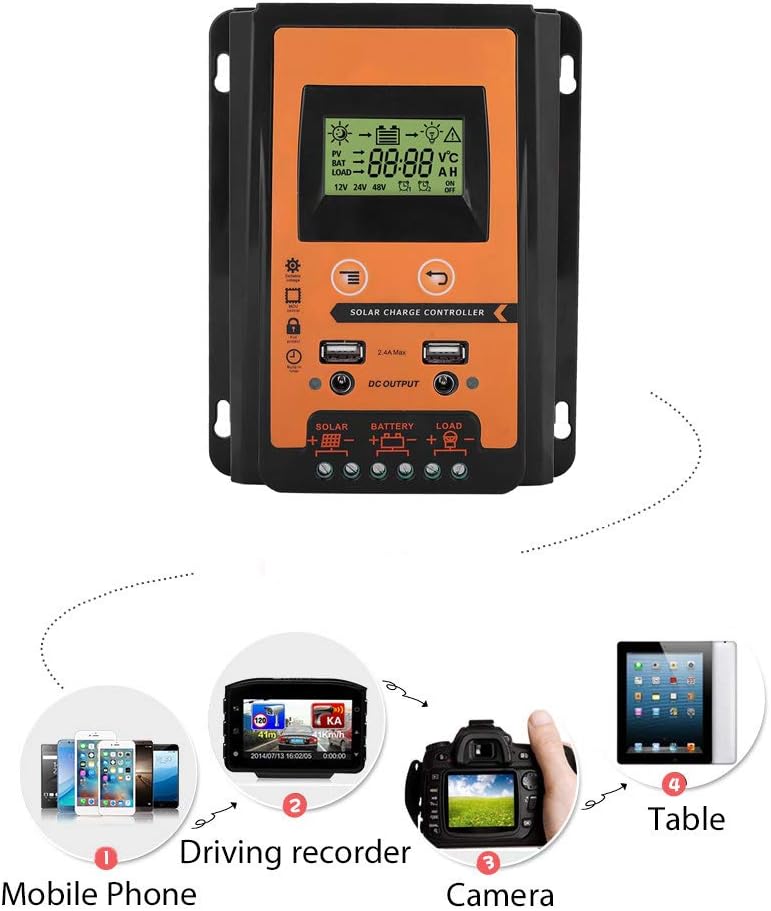
Image 5.1: Diagram illustrating the correct connection order for the solar panel, battery, and load to the Fydun Solar Charge Controller.
Important: Always connect the battery first and disconnect the load first, then the solar panel, and finally the battery when disassembling the system.
6. Bedriuwsinstruksjes
The controller features an LCD display and control buttons for monitoring and adjusting settings.
6.1. LCD Display
The LCD display provides real-time information about your solar system, including:
- Sinnepaniel voltage en oplaadstatus.
- Batterij voltage en lading nivo.
- Load status (on/off) and current.
- Systeem voltage (12V of 24V).
6.2. Oanpassing Voltage Ynstellings
The controller allows for manual adjustment of certain voltage parameters, such as the over-discharge recovery voltage. If you encounter issues or need to fine-tune your system, you can adjust the voltage:
- Press and hold the MCU control button (usually the 'Menu' or 'Set' button) for approximately 3-4 seconds. This will bring up a management interface on the display.
- Use the 'Add' button (or 'Up' arrow) to navigate through the settings and increase the voltage value until it reaches your desired setting, for example, 13.7V for battery recovery.
- Press the MCU control button again to save the new setting. The display will stop flashing, indicating the data has been saved.
6.3. USB Output Usage
The dual USB ports can be used to charge various 5V devices, such as mobile phones, driving recorders, and cameras.

Image 6.1: Illustration of various portable electronic devices, such as mobile phones, driving recorders, and cameras, being charged via the controller's USB output.
7. Underhâld
Regelmjittich ûnderhâld soarget foar optimale prestaasjes en lange libbensdoer fan jo sinne-laadkontroller.
- Reiniging: Periodically clean the controller's exterior with a dry cloth to remove dust and dirt. Ensure the display remains clear.
- Ferbining kontrôle: Annually inspect all wiring connections to ensure they are secure and free from corrosion. Loose connections can cause overheating and damage.
- Ventilaasje: Soargje derfoar dat it ynstallaasjegebiet goed fentilearre bliuwt om oerferhitting fan 'e controller te foarkommen.
8. Probleemoplossing
Dizze seksje behannelet faak foarkommende problemen en har oplossingen.
8.1. No Output from Load Terminals
- Symptoom: The load connected to the controller is not receiving power.
- Mooglike oarsaak: Batterij voltage is too low. The controller automatically stops output when battery voltage drops below a certain threshold (e.g., 10.5V-11V for a 12V system) to protect the battery from over-discharge.
- Oplossing: Allow the solar panel to charge the battery. The controller will resume load output once the battery voltage recovers to 12.6V (for a 12V system).
8.2. Ferkearde Voltage Readings or Charging Behavior
- Symptoom: The display shows unexpected voltage values, or charging seems inefficient.
- Mooglike oarsaak: Voltage settings may be misconfigured or require adjustment. The normal operating voltage range for the controller is typically 10.7V to 13.7V (for a 12V system).
- Oplossing: Refer to Section 6.2 "Adjusting Voltage Settings" to manually adjust the voltage parameters, such as setting the recovery voltage to 13.7V if needed.
9. Stipe
Fydun is committed to providing reliable products and customer satisfaction. If you have any questions regarding the installation, operation, or troubleshooting of your MPPT Solar Charge Controller, please contact our customer support. We are available to assist you with any inquiries.